
As a leader in the circular economy within the hospitality sector, Tusha is committed to responsible, measurable, and transparent growth. Our commitment is formalized in five core ESG pillars. This strategy ensures we meet the increasing sustainability expectations of regional HoReCa customers and international buyers.
We believe every worker deserves a safe and healthy environment where well being enables meaningful livelihoods.
Conducting basic occupational health and safety (OHS) risk assessments
Achieve zero serious incidents by establishing a basic OHS management system.
Providing personal protective equipment (PPE) and embedding routine safety reminders.
Preparing formal SOPs for workplace safety and conducting regular training.
SDG 8 (Decent Work & Economic Growth) and SDG 3 (Good Health & Wellbeing).
Preparing formal SOPs for workplace safety and conducting regular training.
We believe that customers deserve full confidence that our products are safe, transparent, and responsibly made
Improving product testing and implementing compliant labeling.
Achieve 100% safety documentation across all SKUs.
Establishing customer feedback loops and ensuring full documentation for each product.
Expand testing routines and integrate structured feedback mechanisms to ensure durability and functionality.
SDG 12 (Responsible Consumption & Production).
We believe waste has value, and circular materials can transform the hospitality industry for the better.
Mapping material flows and reducing production waste.
Achieve a 50% reduction in production waste intensity.
Conducting community outreach on waste separation and promoting green purchasing behaviors.
Increase recycled input traceability.
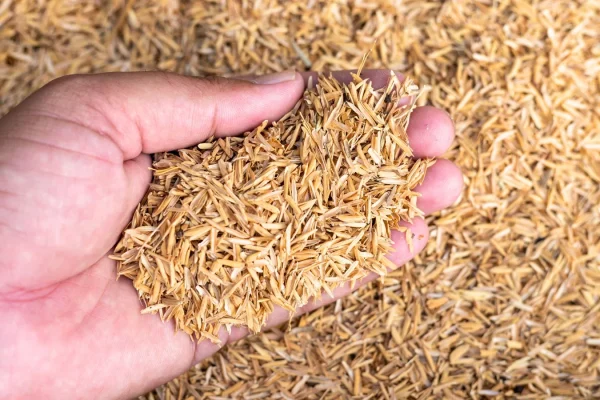
Our core model transforms 90% rice husk and plastic waste into durable products, strengthening the circular tourism ecosystem.
SDG 12 (Responsible Consumption & Production).
We believe responsible sourcing strengthens communities and ensures fairness throughout the value chain.
Mapping material flows and reducing production waste.
Achieve a 50% reduction in production waste intensity.
Conducting community outreach on waste separation and promoting green purchasing behaviors.
Increase recycled input traceability.
Our core model transforms 90% rice husk and plastic waste into durable products, strengthening the circular tourism ecosystem.
SDG 12 (Responsible Consumption & Production).
We believe climate action begins with small but consistent steps that build resilience for future generations.
Establishing a baseline for emissions measurement.
Reduce energy intensity by 20% through efficiency measures and renewable adoption.
Conducting the first energy-use assessment and creating an SOP for carbon monitoring.
Improve resource efficiency through energy, water, and material monitoring.
SDG 13 (Climate Action) and SDG 12 (Resource Efficiency).
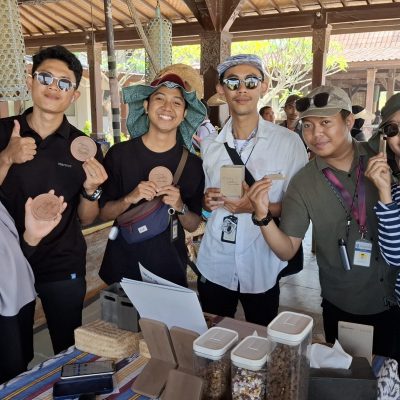
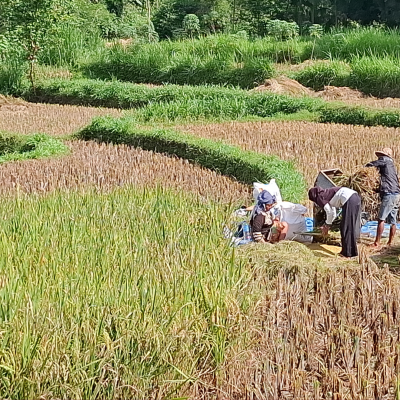
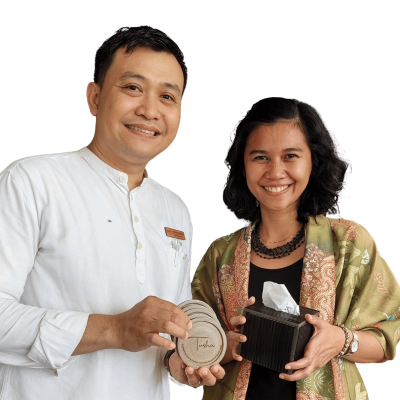
Authentic Stories from Lombok: Craft, Culture, and the Circular Tourism Ecosystem.
We are committed to formalizing our sustainability practices and deepening transparency.
Our immediate focus for the coming year includes:
Finalizing Standard Operating Procedures (SOPs) for OHS, product safety, and supplier selection.
Establishing the official baseline for operational emissions and material flows.